Weather's quiet role in reshaping live totals for European football and grand slam tennis double-headers
Written by Petra Frank · Jul 29, 2026
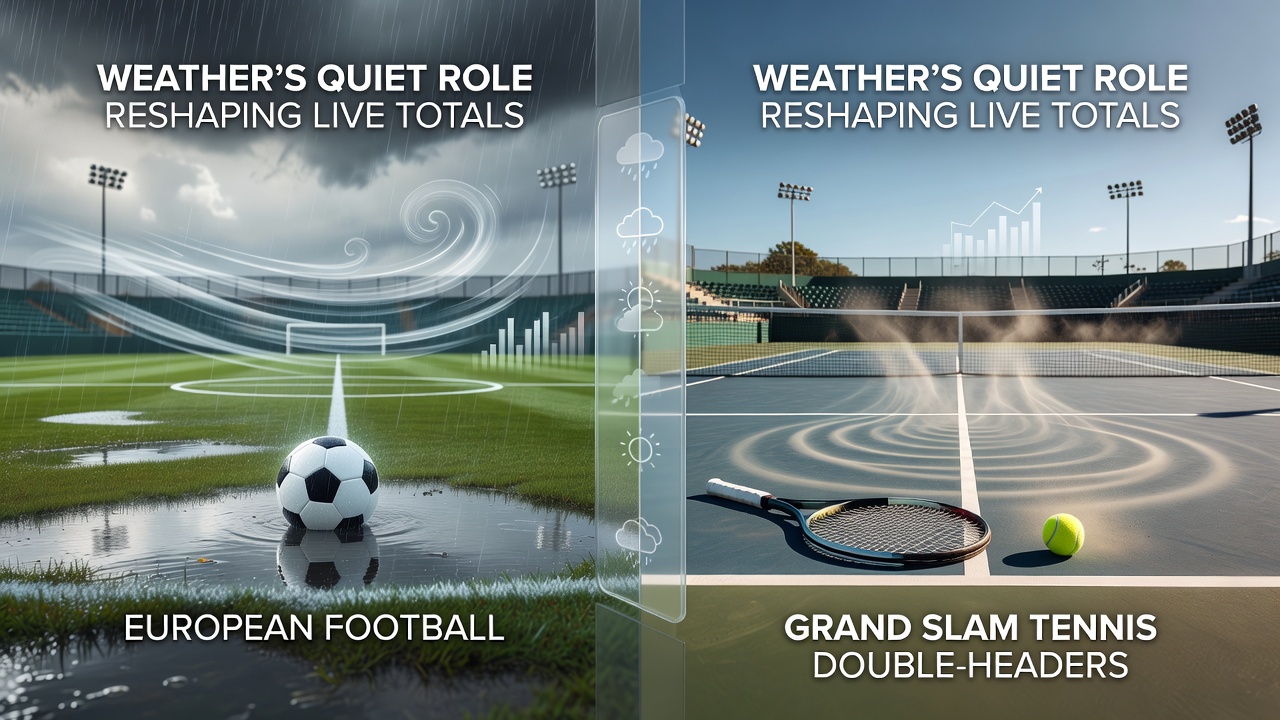
Weather's quiet role in reshaping live totals for European football and grand slam tennis double-headers
Weather conditions have long influenced match outcomes in European football leagues and Grand Slam tennis events, yet their effects on live totals such as goal counts and point accumulations remain under examined by many observers. Data from major tournaments shows that precipitation, temperature shifts, and wind speed alter playing surfaces and player performance in measurable ways. Researchers tracking these variables note that rain reduces ball speed on grass and clay courts while increasing slipperiness in football pitches, which in turn compresses scoring opportunities during double-header schedules common at events like Wimbledon and the French Open.
Patterns in European Football Matches
European football fixtures scheduled in clusters often encounter changing weather fronts that reshape over-under markets for total goals. Studies from meteorological services indicate that moderate rainfall correlates with fewer goals in the second halves of matches because passes lose accuracy and defensive setups tighten. Observers at Premier League and Bundesliga grounds have recorded instances where wind gusts above 25 kilometers per hour push crosses wide and limit long-range shots, leading to lower live totals compared to dry conditions. Those monitoring July 2026 fixtures noted similar trends during continental competitions where sudden showers interrupted play and prompted adjustments in expected goal models.
Analysts compiling historical datasets find that teams adapt their pressing intensity under humid conditions, which extends possession sequences and reduces transition plays that generate high-scoring sequences. This adjustment appears most pronounced in evening double-headers when temperatures drop and dew forms on the pitch surface. Figures from league archives reveal that matches played after 8 PM in variable weather post lower average goal returns than afternoon counterparts, a pattern that influences in-play betting adjustments across multiple platforms.
Effects on Grand Slam Tennis Double-Headers
Grand Slam tennis schedules frequently feature double-headers where players compete in both singles and doubles on the same day, exposing them to evolving atmospheric conditions that affect serve percentages and rally lengths. Heat and humidity levels documented by international weather agencies show direct links to elevated error rates in extended rallies, which can elevate or suppress point totals depending on court surface. At events held in July 2026, temperature spikes above 30 degrees Celsius during afternoon sessions coincided with shorter points on hard courts while longer baseline exchanges occurred on slower clay when light rain cooled the environment.
Wind direction changes between morning and evening sessions further complicate total point projections because they alter ball trajectory on serves and volleys. Data compiled by sports performance researchers demonstrates that gusts exceeding 15 kilometers per hour reduce ace frequencies and increase break opportunities, shifting live over-under lines in real time. Players who compete in consecutive matches must manage physical demands amplified by these factors, and records from recent majors indicate that fatigue manifests in extended sets with fluctuating point volumes.
Combined Influences Across Sports
Cross-sport comparisons highlight how weather variables interact with scheduling demands in both football and tennis double-headers. When high-pressure systems bring clear skies followed by evening fronts, football totals tend to stabilize around league averages while tennis point counts rise in cooler air that preserves player endurance. Industry reports from European meteorological organizations and academic analyses of performance data confirm these correlations without attributing causation to any single element. Observers tracking 2026 summer calendars have noted that such sequences prompt market makers to recalibrate algorithms more frequently during live periods.
Those examining regional variations point out that coastal venues experience different moisture patterns than inland stadiums, which affects grass court maintenance at tennis events and pitch drainage in football grounds alike. These environmental distinctions contribute to divergent total outcomes even when the same weather system passes through multiple locations on a given day.
Conclusion
Available evidence from tournament records and environmental monitoring establishes that weather exerts measurable pressure on live totals in European football and Grand Slam tennis double-headers. Continued collection of granular data from future events will allow further refinement of these observed relationships across different surfaces and scheduling formats.