Unpacking Jet Lag Recovery Timelines and Their Measurable Effects on Performance Metrics During Transatlantic Basketball Series
Written by Petra Frank · Jun 27, 2026
Unpacking Jet Lag Recovery Timelines and Their Measurable Effects on Performance Metrics During Transatlantic Basketball Series
Jet Lag Basics for Cross-Atlantic Travel
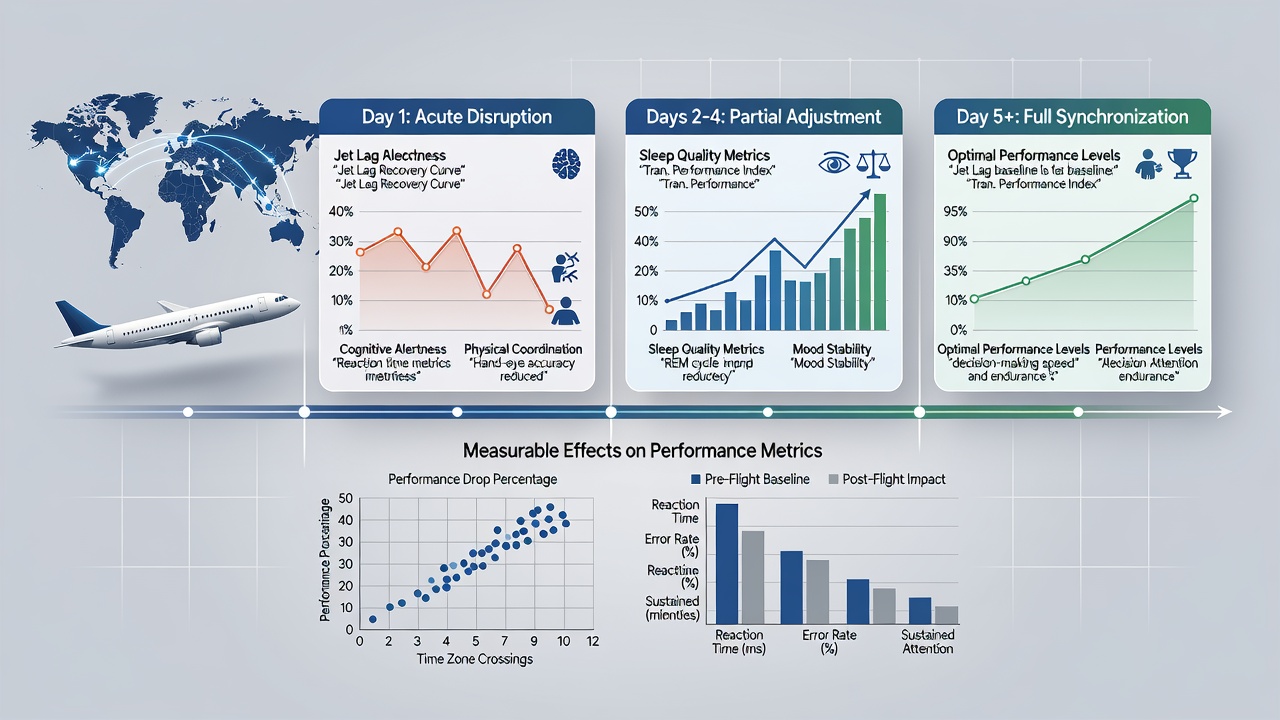
Transatlantic flights between North America and Europe typically cross five to eight time zones, and researchers have documented how this shift disrupts circadian rhythms in athletes who compete in basketball series across those distances. Studies from sports science institutions show that the body requires approximately one day to adjust for each time zone crossed, though individual factors such as age, sleep habits, and flight direction influence the exact period needed for full recovery. Eastward travel tends to produce longer adjustment times than westward journeys because the internal clock must advance rather than delay, and data collected from professional athletes confirm measurable drops in reaction time and endurance during the first 48 to 72 hours after landing.
Recovery Timelines Observed in Practice
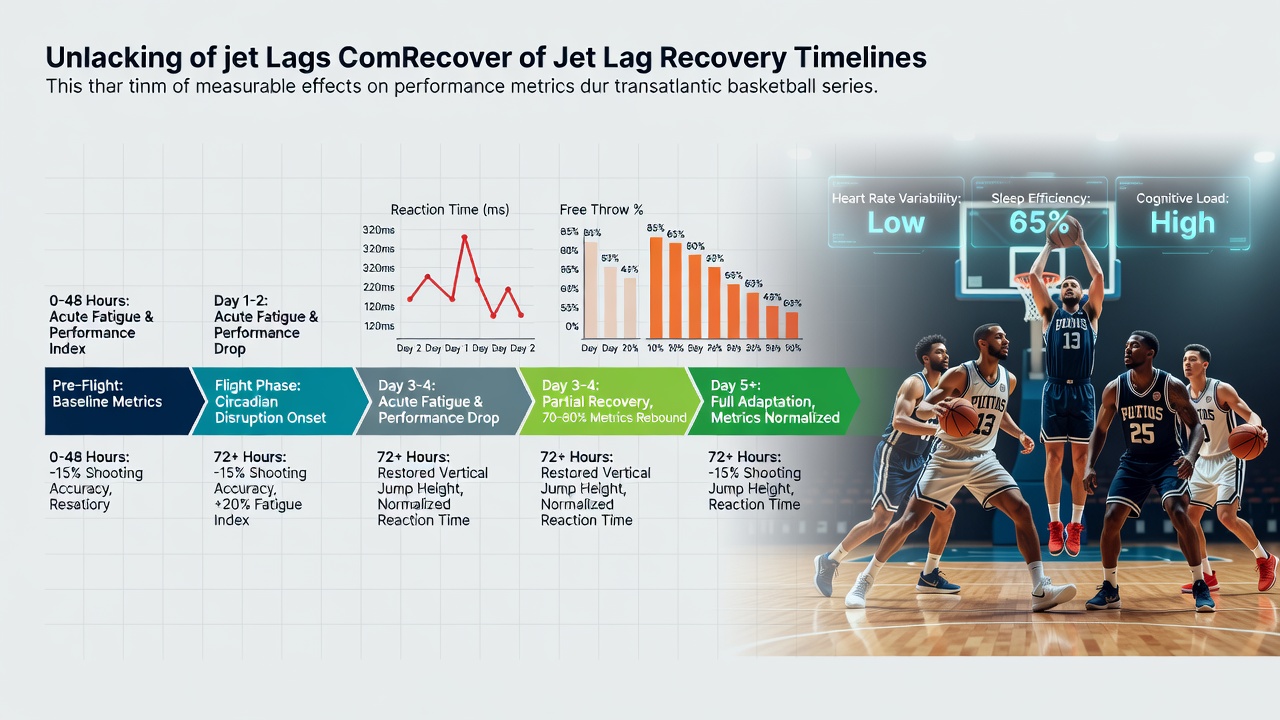
Performance tracking organizations have compiled timelines that outline when basketball players regain baseline levels after long-haul flights. Within the first 24 hours, athletes often exhibit reduced sleep efficiency and elevated cortisol levels, according to physiological monitoring conducted during exhibition tours. By day three, heart rate variability begins to stabilize, yet shooting accuracy and sprint recovery metrics remain below average until the fifth or sixth day in many recorded cases. Teams that arrive seven or more days before competition demonstrate closer alignment with home performance standards, whereas squads on tighter schedules show persistent deficits in both offensive efficiency and defensive positioning data.
Measurable Impacts on Key Performance Metrics
Statistical databases maintained by league analytics departments reveal concrete changes across several categories when teams play soon after transatlantic crossings. Field goal percentages decline by an average of 4 to 7 percent in games occurring within 72 hours of arrival, while three-point shooting shows even larger variance in some series. Turnovers increase as decision-making speed slows, and assist-to-turnover ratios shift noticeably during the initial portion of a road trip. Rebound rates also fluctuate because timing on jumps and positioning suffer when neuromuscular coordination has not fully recalibrated, and researchers note these patterns hold across multiple seasons of international competition.
What's interesting is how defensive metrics respond differently from offensive ones. Block and steal numbers drop more sharply in the first two games, yet they recover faster once players adapt to local meal and training times. Meanwhile, free-throw accuracy tends to remain depressed longer because the routine nature of the shot still requires precise circadian alignment for consistent release mechanics. Data sets from European tournaments that host North American squads illustrate these distinctions clearly, and similar patterns appear when European teams travel westward for series in the United States.
June 2026 Series Context and Scheduling Considerations
Several transatlantic basketball events scheduled for June 2026 incorporate extended acclimatization windows based on accumulated research into recovery patterns. Organizers have adjusted arrival dates so that participating teams land at least six days before tip-off, allowing circadian realignment to occur before competition begins. Performance logs from prior events indicate that such buffers reduce the magnitude of early-game statistical declines, particularly in categories like points scored in transition and opponent field goal percentage allowed. Medical staff now routinely monitor sleep trackers and reaction tests to fine-tune training loads during the adjustment phase, and these protocols have become standard for any series that crosses the Atlantic.
Strategies Backed by Research Findings
Coaching staffs implement light exposure schedules, timed melatonin use, and adjusted practice intensities to accelerate adaptation, and longitudinal studies confirm modest improvements in recovery speed when these interventions are applied consistently. Nutrition timing also plays a documented role, with meals aligned to destination time zones helping stabilize energy availability during the first few days. Teams that combine multiple interventions record smaller dips in sprint distance covered and higher percentages of successful high-difficulty shots compared with groups relying on a single method. Academic papers published in sports medicine journals continue to track these outcomes across different age groups and competition levels, providing updated benchmarks for future scheduling decisions.
Conclusion
Transatlantic basketball series present predictable challenges rooted in circadian disruption, and performance data collected over multiple seasons demonstrate clear timelines for recovery alongside measurable effects on shooting, decision-making, and physical output. Organizations that incorporate evidence-based arrival schedules and targeted interventions achieve closer alignment with baseline metrics, while compressed timelines correlate with statistically significant declines across several key categories. Continued monitoring and refined protocols remain central to managing these factors in upcoming events.