Timeout Clusters Exposing Overlooked Edges in College Basketball Totals
Written by Petra Frank · Aug 24, 2026
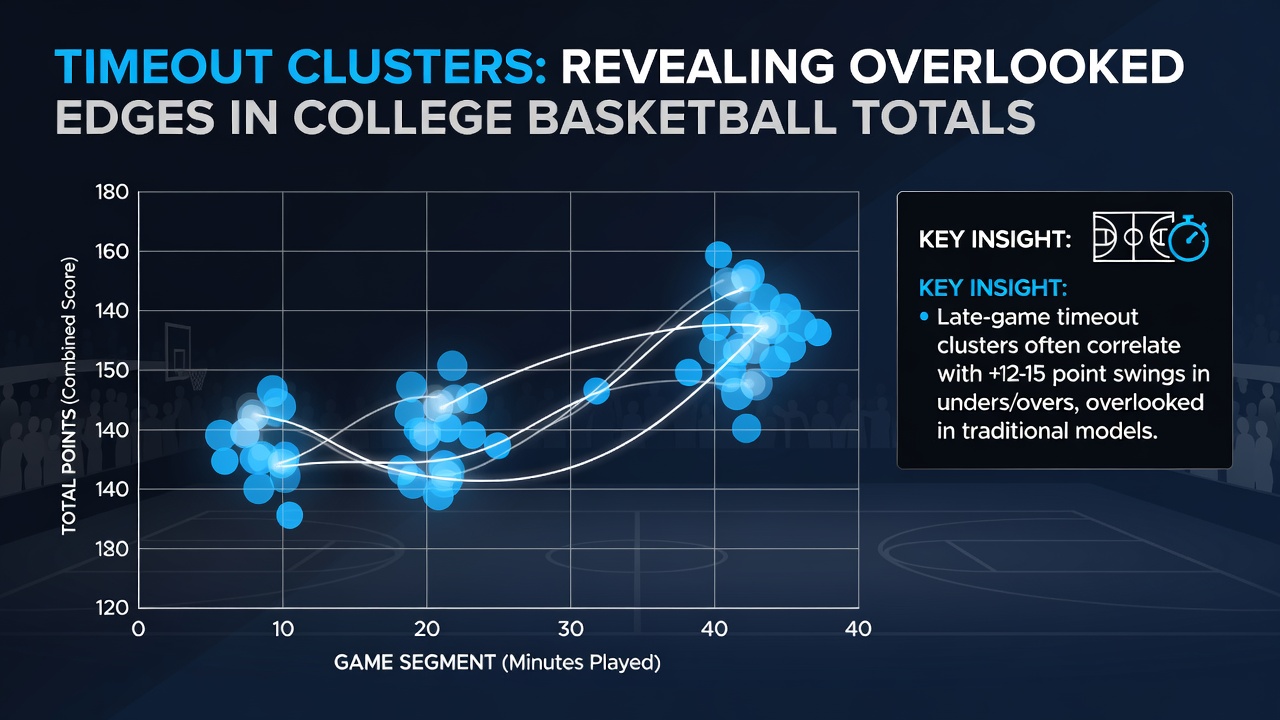
Timeout Clusters Exposing Overlooked Edges in College Basketball Totals
Data from recent NCAA seasons shows that clusters of timeouts, defined as three or more stoppages within a five-minute window, correlate with measurable shifts in scoring pace during college basketball contests. Researchers tracking these patterns across Division I games have identified consistent impacts on total points, particularly when such groupings occur in the first half or during transition periods between halves. Observers tracking live betting markets note these moments often precede slower offensive flows as coaches adjust defensive schemes and substitute rotations. Analyses of game logs from the 2024-2025 campaign reveal that timeout clusters appear in approximately 38 percent of matchups, with higher frequency in conference play compared to non-conference scheduling. When these clusters form early, average points per possession drop by 0.12 to 0.18 according to tracking data compiled by multiple analytics groups. This reduction stems from extended defensive resets and inbound adjustments that disrupt rhythm for both teams, though the effect registers more strongly on high-tempo offenses.Patterns Across Conference and Non-Conference Games
Conference games produce timeout clusters at elevated rates because coaching staffs prioritize tactical adjustments against familiar opponents. In contrast, non-conference schedules feature fewer such groupings since teams focus on establishing baseline pace rather than countering specific tendencies. Figures from the 2025-2026 season indicate that mid-major conferences record the highest incidence of clusters, reaching 42 percent of games through the first four months of play.
Teams employing slower base tempos experience amplified effects when clusters occur because their offensive sets already emphasize half-court execution. Faster-paced programs, meanwhile, show quicker recovery in the minutes following multiple timeouts, though totals still trend lower overall. These distinctions help explain why certain conference matchups deliver consistent under tendencies across multiple seasons.
Timing Within Games and Scoring Implications
Clusters forming between the eight- and twelve-minute marks of the first half coincide with the most pronounced reductions in second-half scoring. Data indicates an average decline of 4.7 points in combined second-half output when such early groupings appear. Late-game clusters, particularly those in the final four minutes, produce smaller but still measurable effects, often trimming overtime possibilities by altering foul accumulation patterns.
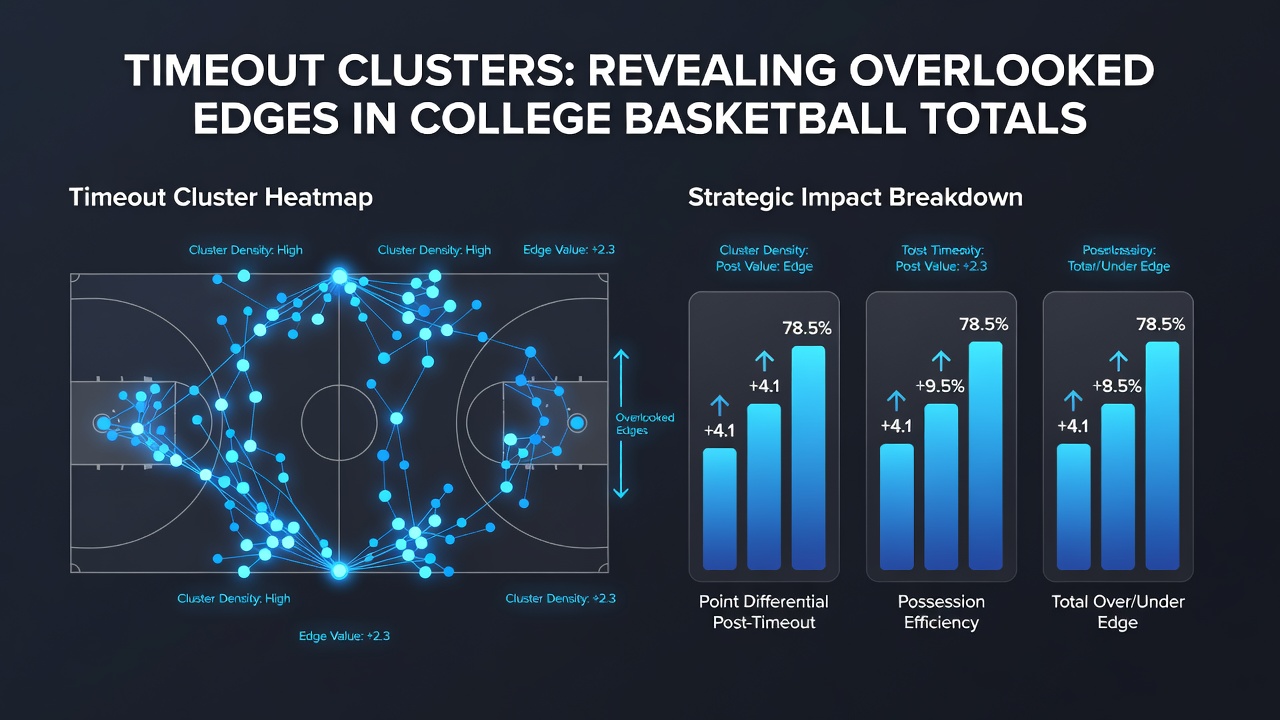
August 2026 reviews of prior-year data confirmed that neutral-site tournaments generate fewer clusters overall, likely due to reduced familiarity between coaching staffs and shorter preparation windows. This scheduling factor contributes to higher average totals in those events compared to regular-season conference tilts.
Integration With Other Game Variables
Timeout clusters interact with rest advantages, travel distance, and back-to-back scheduling in ways that further shape total outcomes. Games involving teams with limited rest show amplified under biases when clusters develop, as fatigue compounds the pace-slowing effects. Travel-heavy road teams exhibit similar tendencies, with combined scoring dropping an additional 2.1 points on average in these scenarios.
Referee crew assignments also factor into the equation. Certain crews issue fewer stoppages for reviews during clustered periods, allowing play to resume faster and partially offsetting the pace reduction. Tracking services that log crew-specific tendencies provide additional layers for identifying edges in totals markets.
Practical Applications in Totals Markets
Market participants monitoring live odds adjust lines downward following confirmed clusters, with the magnitude of adjustment correlating to cluster size and game timing. Historical closing totals from major sportsbooks reflect these movements, though discrepancies persist in lower-profile conferences where line movement lags behind the observed pace shifts.
Cross-referencing cluster frequency with seasonal averages allows identification of teams and venues where the pattern repeats most reliably. Programs with high cluster rates in home games produce under-friendly environments more consistently than those that limit stoppages.
Conclusion
Timeout clusters represent a structural element within college basketball that influences scoring pace and total outcomes across varied contexts. Data compiled from NCAA contests demonstrates repeatable correlations between these groupings and reduced points production, particularly when timing and team style align in specific ways. Continued tracking of these patterns through the 2026-2027 season will further clarify their predictive value in totals betting frameworks.