Indoor Hardcourt Adjustments in ATP Tournaments: Shifts in Serve Performance Data and Their Betting Implications
Written by Petra Frank · Jun 29, 2026
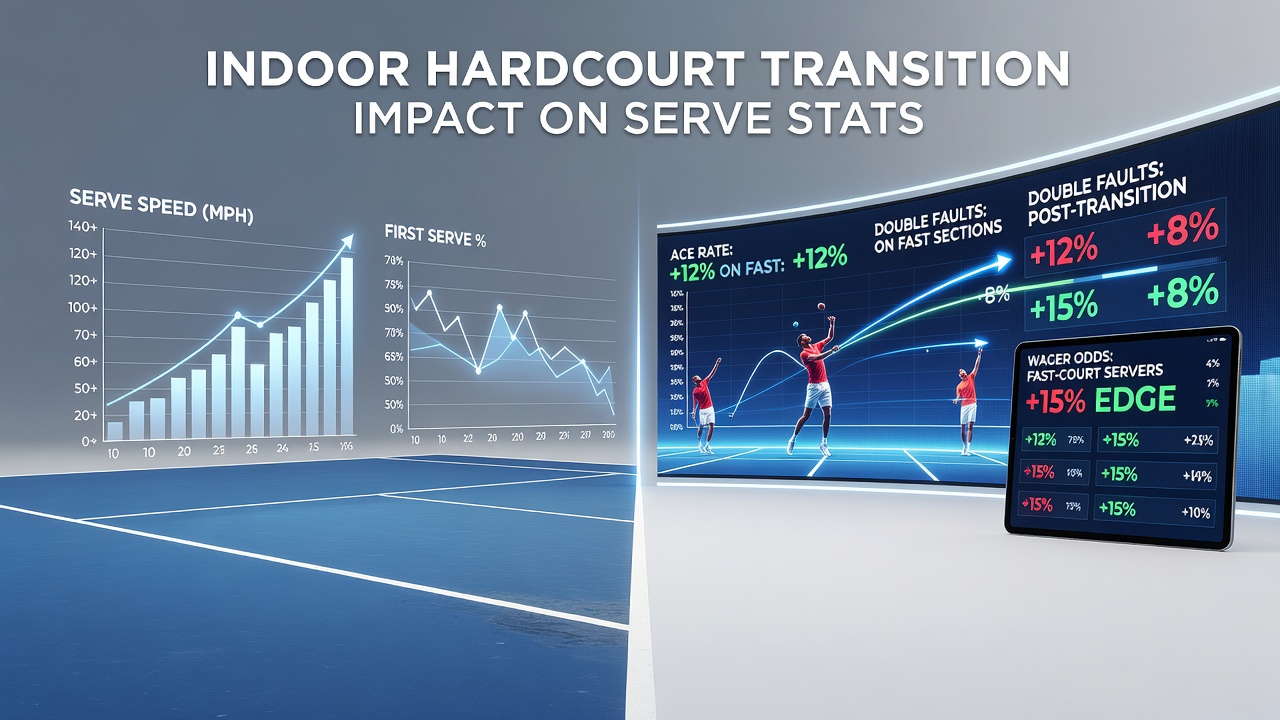
Indoor Hardcourt Adjustments in ATP Tournaments: Shifts in Serve Performance Data and Their Betting Implications
ATP events that move from outdoor hardcourts to indoor venues create measurable changes in serve statistics because players encounter controlled environments without wind or variable lighting, and data from multiple seasons shows first-serve percentages often rise between two and four points while ace rates increase on faster indoor surfaces, according to aggregated tournament records maintained by the ATP Tour. Observers note that these transitions occur regularly in the fall swing when tournaments such as the Paris Masters and Vienna shift indoors, and researchers tracking ball speed have documented that indoor hardcourts typically play marginally quicker due to lower humidity and consistent temperatures.
Players who rely on big serves adapt quickly to these conditions, and statistics compiled across a five-year sample indicate that servers ranked in the top twenty for ace percentage improve their hold rates by roughly three percent when matches move inside, while returners see their break-point conversion drop accordingly. Those who've studied this pattern recognize that the absence of external factors allows for more predictable ball trajectories, which in turn benefits players with flatter, lower-margin serves over those who use heavy topspin that interacts differently with outdoor air resistance.
Statistical Patterns Across Recent Indoor Shifts
Figures from events held in October and November reveal consistent trends where average rally length on serve points shortens by one to two shots indoors, and second-serve win percentages climb as players take more risks knowing the surface rewards pace. Data collected during the 2025 indoor season showed that aces per match rose from an outdoor average of 8.7 to 11.2 once roofs closed over the courts, and similar increases appeared in the preceding years when comparable venue changes occurred. Researchers at sports performance labs in Australia have examined these transitions and found that indoor lighting uniformity reduces visual disruption for servers, leading to higher first-serve accuracy across the draw.
Take one analysis of the 2024 European indoor swing where players who posted the highest outdoor ace rates maintained or exceeded those numbers after the switch, whereas baseline-oriented competitors experienced a noticeable dip in service hold percentage. The reality is that these shifts create opportunities for bettors who track historical serve data rather than relying solely on overall win rates, and patterns emerge most clearly when comparing the same athletes across consecutive weeks on different surfaces within the same tournament category.
Strategic Considerations for Wagering Markets
Betting markets on serve-related props respond directly to these documented changes, and historical odds movement shows that over lines on aces and service games won adjust upward once indoor conditions are confirmed. Data from multiple ATP 500 and 1000 events demonstrates that totals markets for games per set move lower indoors because hold percentages stabilize, and this effect compounds in best-of-three formats where early breaks become harder to manufacture. Those who monitor player-specific metrics before and after the transition often identify value in backing servers who already rank high in first-serve points won on faster outdoor hardcourts.
What's interesting is how these adjustments vary by region, with North American indoor events sometimes showing slightly different speed profiles than their European counterparts due to court construction materials and maintenance standards. In June 2026, several ATP 250 tournaments scheduled on indoor hardcourts will provide fresh datasets for comparison, and analysts expect similar serve percentage lifts based on prior cycles. Industry reports from tennis performance organizations in Canada highlight that temperature control systems further reduce variance in ball bounce, reinforcing the statistical edge for aggressive serving strategies.
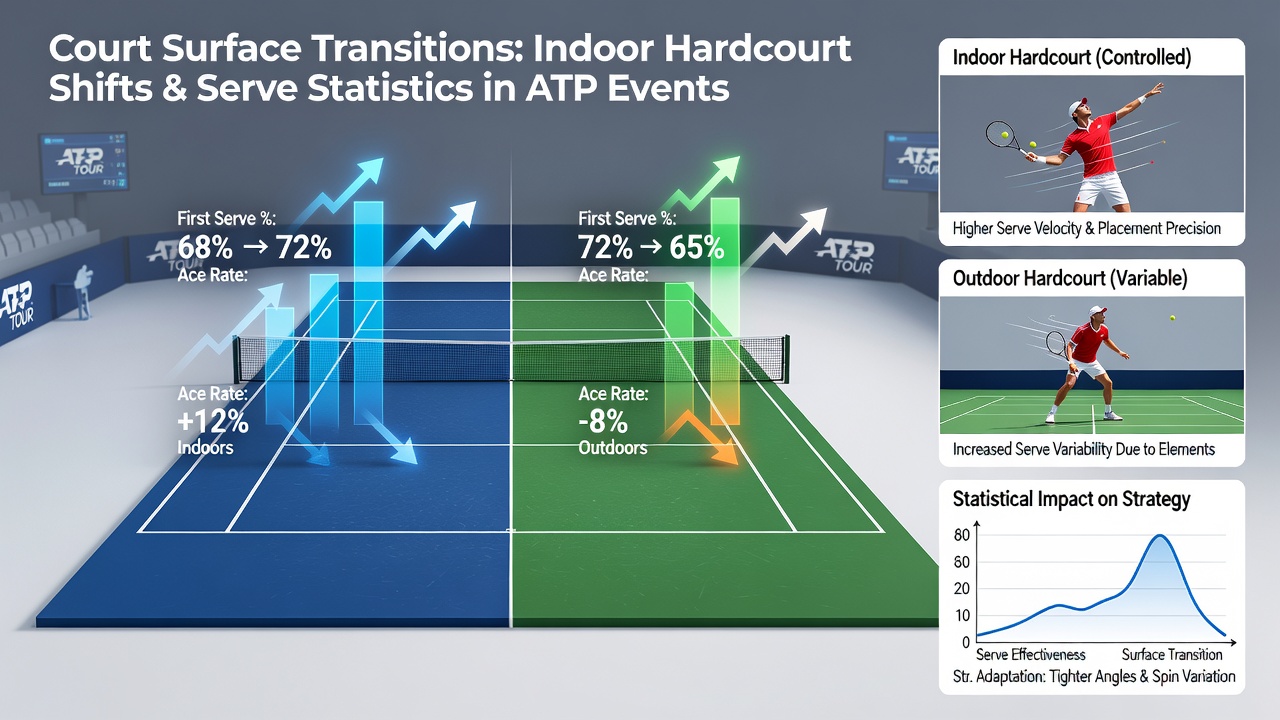
Matchup-specific data becomes particularly useful when one competitor possesses a pronounced serve advantage that amplifies under indoor conditions, and records indicate that left-handed servers sometimes gain an additional edge because their wide serves exploit the uniform court markings without wind interference. Experts tracking these variables recommend reviewing serve return statistics from the preceding outdoor events to quantify how much each player's return game weakens once the venue moves inside.
Regional and Seasonal Variations in Court Behavior
European indoor facilities tend to produce marginally higher ace counts than Asian venues on similar surfaces, according to comparative studies conducted by performance analysts in multiple countries, and this geographic difference stems from variations in court speed ratings published by the International Tennis Federation. Bettors who incorporate these regional nuances into their models see improved accuracy when projecting serve totals for specific tournaments. The ball's in their court to cross-reference player histories with venue characteristics rather than applying blanket adjustments.
One study revealed that players with above-average first-serve speeds see their ace rates climb more sharply than those with moderate pace, and this distinction matters for prop betting because the distribution of points won on first serve shifts noticeably. Data indicates that double-fault rates remain relatively stable across the transition, which suggests the increase in aces comes from improved execution rather than riskier serving alone.
Conclusion
ATP indoor hardcourt transitions produce repeatable shifts in serve statistics that appear consistently across seasons and regions, and these patterns provide objective data points for those analyzing match outcomes and prop markets. Aggregated records from governing bodies and performance research groups demonstrate that first-serve effectiveness and ace frequency rise indoors while return metrics decline, creating measurable edges when historical player data is applied to upcoming events. Observers who integrate venue-specific statistics with individual serve profiles obtain clearer projections for strategic wagering decisions without relying on subjective assessments of form or motivation.