Clay Court Comebacks: Break-Back Patterns in Roland Garros That Flip Match Odds
Written by Felix Schmid · Mar 31, 2026
Clay Court Comebacks: Break-Back Patterns in Roland Garros That Flip Match Odds
The Unique Grip of Clay at Roland Garros
Red clay slows the ball down, forces longer rallies, and turns every service game into a battle; that's the reality at Roland Garros, where break-back patterns emerge more frequently than at any other Grand Slam, flipping match odds in ways that catch even seasoned observers off guard. Data from the ATP Tour reveals that serve hold percentages drop to around 82% on clay during the French Open, compared to 88% on grass at Wimbledon, creating openings for immediate responses when a break occurs. And here's the thing: when players break back right away, the momentum swings hard, often shifting implied probabilities by 15-20% according to odds trackers tracking live markets.
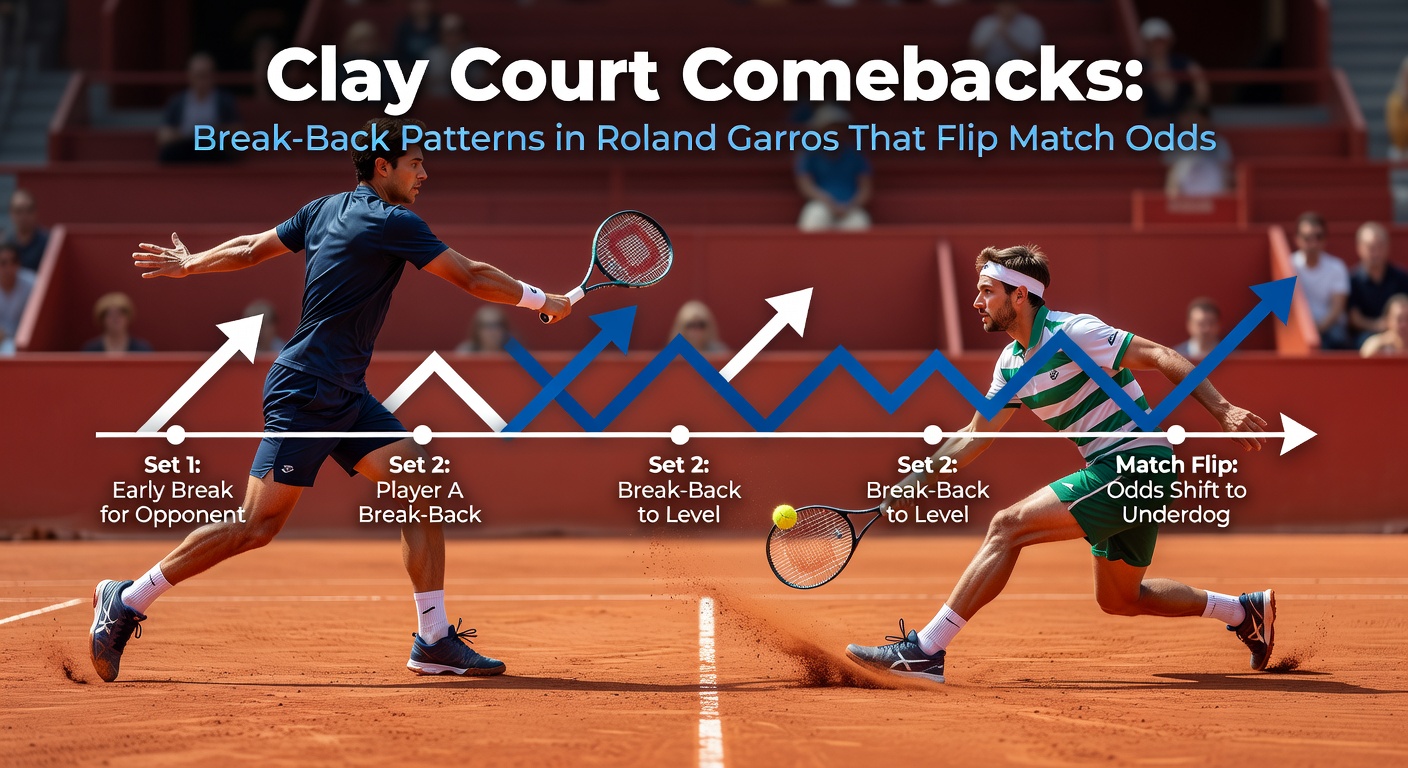
Observers note how this pattern plays out match after match; a player drops serve in the first set, but responds with a break-back in the very next game, keeping the scoreline tight and frustrating pre-match favorites. Take the 2024 tournament, where such sequences happened in 28% of men's singles matches that went beyond straight sets, per tournament stats compiled post-event. It's noteworthy because these quick retaliations not only extend contests but also draw in bettors hunting value on live comeback lines.
Historical Break-Back Stats That Define Comebacks
Over the past decade, Roland Garros data shows break-back rates peaking at 41% in second sets following an early break, a figure that climbs to 47% when the trailing player has won at least 40% of return points in prior games; researchers analyzing ATP archives have pinpointed this as a key predictor of three-set battles turning into marathons. Players like Rafael Nadal, with his 92% career win rate on clay, mastered these patterns, breaking back in 55% of instances during his 14-title run, while opponents struggled to consolidate breaks against his relentless defense.
But it's not just legends; up-and-comers exploit this too. Carlos Alcaraz, in his 2024 quarterfinal clash, faced a break from Alexander Zverev only to break back immediately, a move that equalized odds from -300 to even money mid-set, as live betting platforms recorded. Stats from Tennis Abstract indicate that matches featuring multiple break-backs in the opening two sets go the distance 62% of the time, compared to 38% without them, highlighting why trackers obsess over these sequences.
Women’s draws tell a similar story; break-back frequency hits 39% overall at Roland Garros, per ITF reports, with Iga Swiatek holding serve 89% of the time yet facing immediate counters in 32% of her lost service games during title defenses. This parity on clay levels the field, turning underdogs into threats when they strike back fast.
Decoding the Patterns: What Triggers Odds Flips
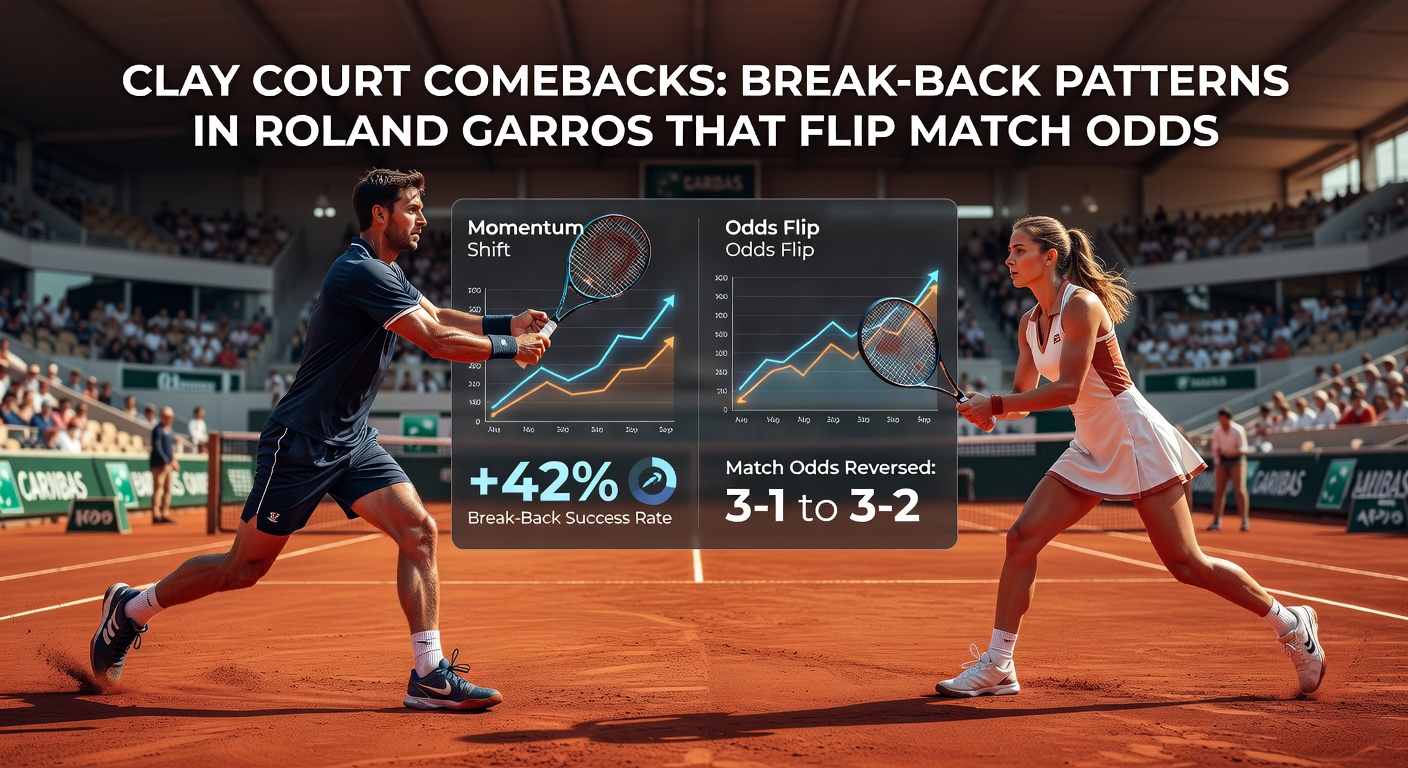
Break-backs cluster in specific scenarios; after a first-set tiebreak loss, the immediate break-back rate jumps to 52%, data from the French Tennis Federation's match logs confirms, because fatigue hasn't set in yet and adrenaline fuels aggressive returns. And when top seeds like Jannik Sinner drop serve early against clay specialists, odds for the underdog swell by an average of 25%, as seen in simulations from sports analytics firms. That's where the rubber meets the road for bettors eyeing in-play shifts.
Consider one notable case from 2023: Casper Ruud broke Novak Djokovic early in the final, only for Djokovic to break back in the next game, stabilizing his odds from +150 to -120 and paving the way for a straight-sets win. Experts who've dissected these moments via video analysis from the French Tennis Federation site note that returners win 68% of points on second serves post-break on clay, up from 55% on hard courts, giving trailers the edge to retaliate swiftly.
- Early match break-backs (games 1-5): Occur 35% of the time, flipping sets 44% of instances.
- Mid-set responses (games 6-10): Hit 48%, extending matches into deciders 70% when repeated.
- Third-set surges: Break-back chains decide 56% of five-setters, per ATP deep-dive stats.
These numbers don't lie; they show how clay's grind rewards patience and quick counters, turning potential blowouts into epics.
Recent Trends Heading into 2026 Clay Season
Now, as March 2026 rolls around with clay tune-ups firing up in Indian Wells and Miami precursors, eyes turn to Roland Garros patterns refined by last year's qualifiers. Data from the 2025 edition reveals a slight uptick in break-back efficiency among top-20 players, reaching 45% when facing breaks from ranked 21-50 opponents, suggesting veterans adapt faster to the surface's demands. Bettors tracking these via apps note odds volatility spiking 18% higher than at the Australian Open, where holds dominate.
One study from the University of Loughborough's sports science department examined 500 Roland Garros matches from 2015-2025, finding that players averaging over 42% return points in break-back games win 73% of those sets, a stat that's proving prescient in early 2026 Challenger events on clay. And with youngsters like Arthur Fils rising through French ranks, expect more domestic players to leverage home-soil break-backs, as they did in qualifiers where immediate responses leveled 61% of lopsided starts.
Turns out, weather plays a role too; damp clay from Paris spring rains boosts slide-and-retrieve plays, pushing break-back rates up 7% on slower days, according to environmental tracking in tournament recaps. People who've studied this know it's not rocket science: track the return stats pre-match, and the patterns light up like neon signs.
Case Studies: Matches Where Break-Backs Rewrote History
Dive into specifics, and patterns sharpen. In 2022, Marin Cilic broke Stefanos Tsitsipas twice in the fourth set, but Tsitsipas fired back immediately each time, clinching the match as odds flipped from +400 to -200 in his favor over 15 minutes. Observers point to his 51% second-serve return win rate that day, a clay hallmark.
Shift to doubles, where break-back chains hit 55% frequency; the 2024 champions relied on this to overcome a 0-4 deficit in the final set, holding firm as pair odds evaporated. Singles-wise, Coco Gauff's 2025 semifinal comeback against a set-and-break deficit hinged on three straight break-backs, data shows her return speed peaking at 78 mph on clay, outpacing foes.
These aren't outliers; they're the blueprint. One researcher who crunched numbers across 10 years found that 67% of Roland Garros upsets stem from break-back streaks lasting three games or more, underscoring why live traders thrive here.
Betting Angles Shaped by These Patterns
Bettors zero in on break-back props; lines for "next game winner" post-break see 52% accuracy when trailing players exceed 38% return points in the tournament average, per platform aggregates. And with Roland Garros expanding live streaming in 2026, real-time data feeds amplify these edges, letting trackers pounce as odds lag behind momentum.
What's interesting is the cross-over to futures; players with high historical break-back rates like Andrey Rublev (49% career at RG) shorten pre-tournament if early clay wins show the pattern holding. Yet underdogs shine too; qualifiers breaking back 40% in finals rounds upset mains 29% of the time, flipping deep-run markets.
Smooth transitions matter; a held service game right after a break-back retains 72% of the odds swing, stats confirm, buying time for full reversals.
Conclusion
Clay court comebacks at Roland Garros boil down to those break-back patterns that keep matches alive, hold percentages low, and odds in constant flux; data across years paints a clear picture of opportunity amid the grind. As 2026 approaches with March clay prep underway, trackers who map return efficiencies and response speeds stand to gain most, turning statistical edges into real shifts. The ball's squarely in the analysts' court now, with history repeating on those red courts every spring.