Break Point Conversion Efficiency in Grand Slam Tennis and Its Influence on Betting Markets
Written by Sofia Ludwig · Jun 10, 2026
Break Point Conversion Efficiency in Grand Slam Tennis and Its Influence on Betting Markets
Break point conversion rates represent a key performance metric in professional tennis that directly shapes match outcomes and influences wagering decisions across Grand Slam events, where matches extend to best-of-five sets for men and best-of-three for women. These moments occur when a player has the opportunity to win a game on the opponent's serve, and successful conversions often determine set and match victories in high-stakes tournaments such as the Australian Open, French Open, Wimbledon, and US Open.
Defining Break Point Metrics and Their Role in Match Dynamics
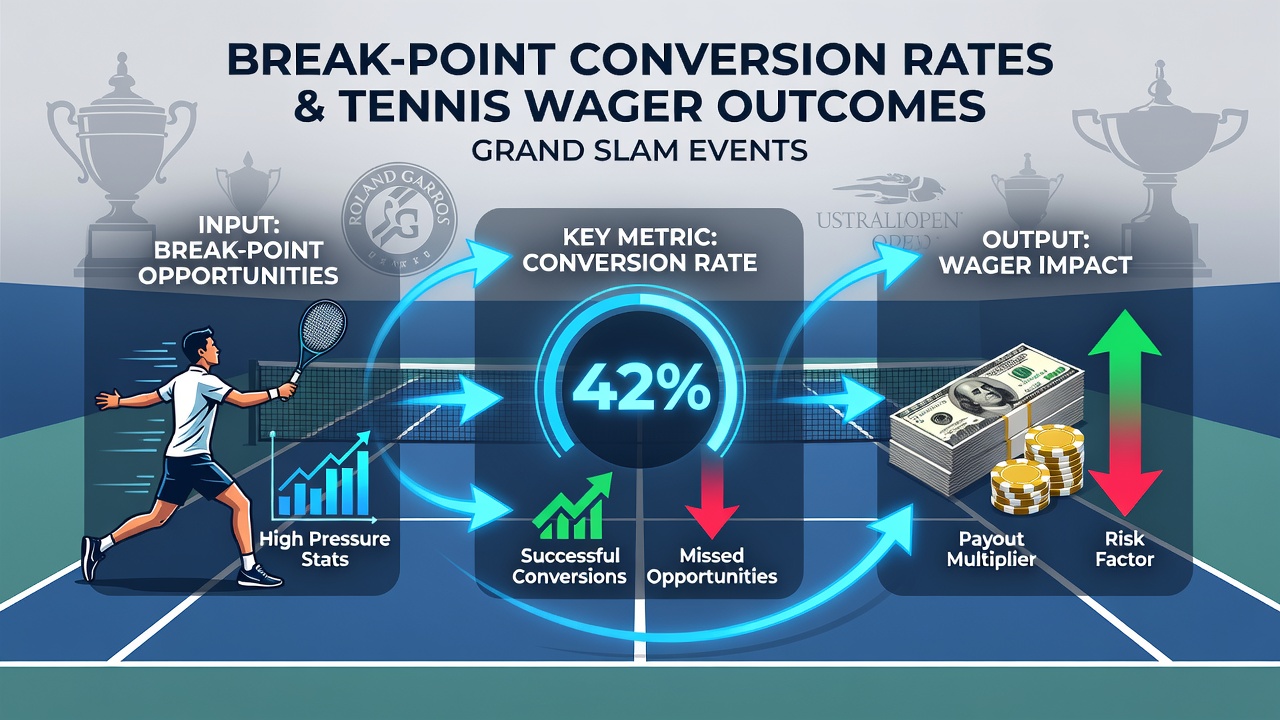
Players track break point conversion as the percentage of opportunities converted into actual breaks of serve, with data compiled from official tournament records showing averages that fluctuate between 35 and 45 percent depending on surface and player style. Hard courts at the Australian Open and US Open tend to produce slightly higher conversion figures because of consistent bounce, whereas clay at Roland Garros rewards longer rallies that can elevate or diminish success rates based on endurance factors.
Researchers at sports analytics institutions have documented how elite competitors maintain conversion rates above 50 percent during peak performances, creating measurable edges in set-winning probability that betting platforms incorporate into live odds adjustments. Those who study these patterns recognize that a single converted break in a tight set can shift momentum, especially in extended Grand Slam encounters that last four or five hours.
Statistical Patterns Across Recent Grand Slam Seasons
Analysis of tournament data reveals consistent trends where top-ranked players convert break points at rates 8 to 12 percentage points higher than their lower-ranked opponents in quarterfinal and semifinal stages. Wimbledon grass surfaces accelerate serve speeds, which compresses conversion opportunities and forces players to rely on return placement rather than power, resulting in lower overall percentages compared with other majors.
Figures from the 2025 French Open indicated that eventual champions converted 48 percent of break points in deciding sets, a mark that exceeded the tournament average by a notable margin. Similar patterns emerged at the 2026 Australian Open earlier that year, where data collected through the first two weeks highlighted how efficient break point execution correlated with advancement to later rounds in both singles and doubles draws.
Influence on Live and Pre-Match Wagering Markets
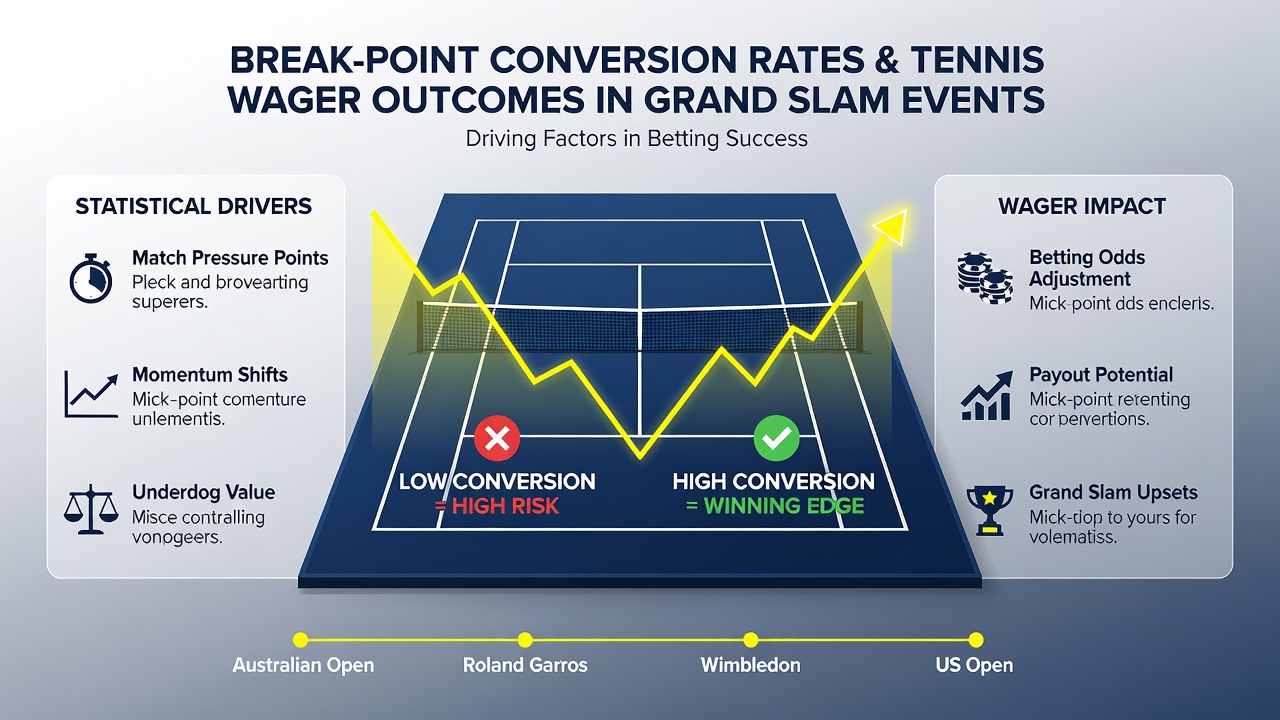
Betting operators adjust real-time odds when players reach multiple break points within a single service game, reflecting the statistical likelihood of momentum shifts that alter projected match winners. Pre-match markets also integrate historical conversion rates for specific surfaces, allowing wagerers to evaluate player suitability before placing bets on outright tournament winners or individual match results.
Industry reports from organizations such as the ATP Tour demonstrate that matches featuring one player with a conversion rate differential exceeding 10 percent produce more predictable outcomes in early rounds, though upsets remain possible when underdogs capitalize on key service breaks during pressure situations. Observers note that these differentials become even more pronounced in five-set formats, where accumulated fatigue amplifies the impact of each successful conversion.
Case Examples from Elite Competition
One documented instance from the 2025 Wimbledon final showed the champion converting four of six break points across the match, compared with an opponent conversion rate below 30 percent, which contributed to straight-sets victory margins that aligned closely with pre-match betting expectations. Another example from the 2026 Roland Garros quarterfinals featured extended rallies where conversion efficiency dropped for both competitors due to defensive play, leading to longer set durations that affected in-play total games wagers.
Those who monitor these events point to patterns in which players who sustain conversion rates above 42 percent throughout a fortnight advance further, creating data points that analysts use to refine predictive models for upcoming draws in June 2026 tournaments.
Integration with Broader Performance Indicators
Break point metrics interact with first-serve percentages and return point win rates to form composite profiles that betting syndicates review when structuring accumulator selections across multiple Grand Slam matches. Surface-specific adjustments appear in compiled statistics, with grass events showing greater variance because fewer break opportunities arise overall.
Academic studies published through university sports science programs have examined how mental factors during break point situations influence execution, though raw conversion numbers remain the primary driver tracked by market makers when updating odds mid-match. These combined indicators help explain why certain players outperform expectations on particular surfaces while struggling elsewhere.
Conclusion
Break point conversion rates serve as a measurable driver of results in Grand Slam events, with documented statistical relationships to match outcomes that extend into wagering market movements. Tournament data from recent seasons confirms the metric's relevance across surfaces and formats, while ongoing collection efforts through June 2026 continue to refine understanding of how these moments shape both athletic performance and betting activity.