Back-to-Back Fixture Congestion and Travel Demands Reshape Accumulator Strategies in Multi-League Sports Betting
Written by Sofia Ludwig · Jun 24, 2026

Back-to-Back Fixture Congestion and Travel Demands Reshape Accumulator Strategies in Multi-League Sports Betting
Back-to-back fixtures combined with extensive travel create measurable shifts in team performance that directly influence how accumulators are constructed across soccer, basketball, and other major leagues, and observers note these patterns have intensified during the congested schedules of early 2026.
Performance Metrics Under Travel Pressure
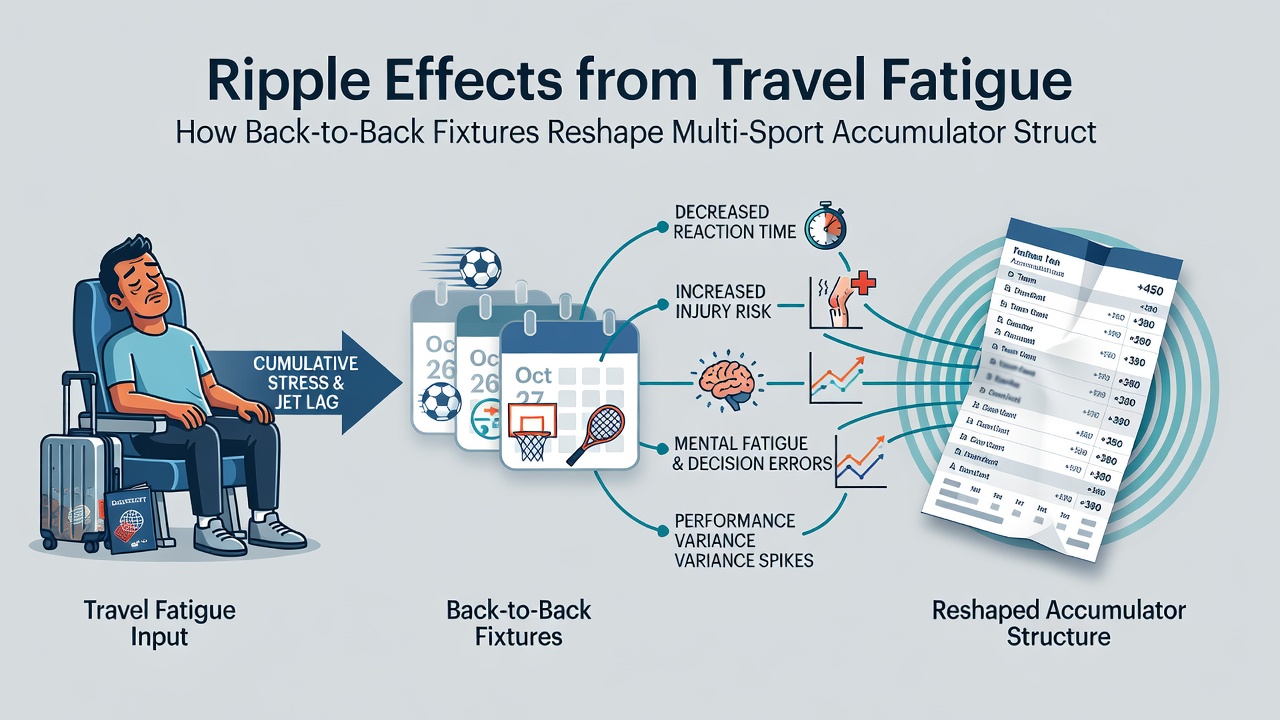
Researchers tracking player output across multiple seasons have documented declines in key statistics such as shooting accuracy, defensive efficiency, and recovery rates when teams face rapid venue changes without adequate rest periods, while data from the National Basketball Association shows average points per game drop by several points on the second night of back-to-backs involving cross-country flights. These measurable dips extend beyond single-sport boundaries because accumulator builders often combine selections from different leagues on the same ticket, which means fatigue patterns in one competition can cascade into the overall structure of multi-sport bets.
League schedules released for the period leading into June 2026 reveal overlapping windows where European soccer clubs and North American basketball franchises play multiple games within short timeframes, and analysts have observed corresponding adjustments in implied probabilities that reflect these strains. Travel distance emerges as a primary variable in these calculations because longer flights correlate with elevated fatigue markers such as reduced sprint speeds and increased turnover rates in subsequent matches.
Cross-League Accumulator Adjustments
Those who construct accumulators spanning soccer and basketball have begun incorporating travel logs and fixture density into their selection criteria, since evidence from performance databases indicates that teams returning from extended road trips post lower win percentages in immediate follow-up contests. This reality prompts a restructuring of bet combinations where selections involving rested home sides gain prominence while away legs after consecutive away games see reduced weighting in overall ticket construction.
Studies conducted by sports science departments at universities in Australia and Canada have quantified how sleep disruption from time-zone shifts affects reaction times and decision-making, findings that betting markets have gradually reflected through adjusted odds lines. Accumulator builders therefore monitor these external factors alongside traditional form indicators to maintain balance across multi-sport selections, and the practice has become more systematic as fixture lists grow denser.
League-Specific Patterns and Data Trends
In European soccer competitions, teams navigating midweek Champions League fixtures followed by domestic league matches exhibit distinct second-half performance declines when travel exceeds certain thresholds, and similar patterns appear in NBA schedules where teams play four games in five nights across multiple cities. These documented trends encourage accumulator participants to diversify selections rather than stacking multiple legs from the same fatigued squad, thereby spreading risk across leagues with differing recovery windows.
Figures compiled by industry research groups in the United States and the European Union illustrate how betting volumes on multi-sport tickets adjust during peak congestion periods, with increased interest in underdog selections from rested rosters. The ball's in the court of data providers who supply real-time travel and recovery metrics to platforms that service accumulator markets, allowing more precise calibration of expected outcomes.
One study revealed that collegiate programs operating under NCAA guidelines experience parallel effects during conference tournament stretches, where back-to-back games compound travel demands and alter point-spread margins in measurable ways. Observers tracking these developments across professional and amateur levels note that accumulator structures increasingly factor in rest differentials as core variables rather than secondary considerations.
Strategic Responses Across Markets
Market participants have adapted by cross-referencing official league schedules with flight and recovery data published by teams themselves, which creates layered selection processes that account for cumulative fatigue across different sports. What's interesting is how this integration of non-traditional variables has led to accumulator formats that mix soccer over/under totals with basketball player props from squads on lighter recent travel loads, producing tickets that better reflect actual performance probabilities.
Regulatory bodies in Canada and Australia have published reports on responsible gambling practices that touch on data transparency in betting products, and these documents encourage platforms to display contextual information such as recent travel schedules alongside standard statistics. Such measures support informed accumulator construction without altering the fundamental mechanics of multi-sport wagering.
Conclusion
Fixture congestion and associated travel continue to generate ripple effects that reshape how multi-sport accumulators are assembled, as performance data across leagues consistently highlights the influence of rest and recovery on results. Those monitoring developments through June 2026 and beyond will likely see further refinements in selection methodologies that integrate these factors into everyday betting structures, supported by expanding datasets from academic and league sources.